Marketplace for Wild & Specialty Food
A marketplace connecting foragers, farmers, and artisan food producers with consumers and restaurants nationwide. Vendors were running their businesses through a patchwork, Instagram for orders, spreadsheets for inventory, Square for payments, and separate websites they rarely updated. No tool existed for how they actually worked: listing chanterelles from a phone at dawn, selling at a Saturday market, and invoicing a restaurant on Monday.
I led product design across three surfaces, consumer marketplace, vendor CMS, and mobile POS — from research through delivery. The goal: replace the fragmented toolchain with one ecosystem.
Discovery
What we learned from the market. Since the client already operated an e-commerce platform, we had direct access to real user feedback, both from buyers and vendors. Through targeted surveys, in-app feedback prompts, and direct conversations with sellers listing their products, we gathered insights that reshaped our design
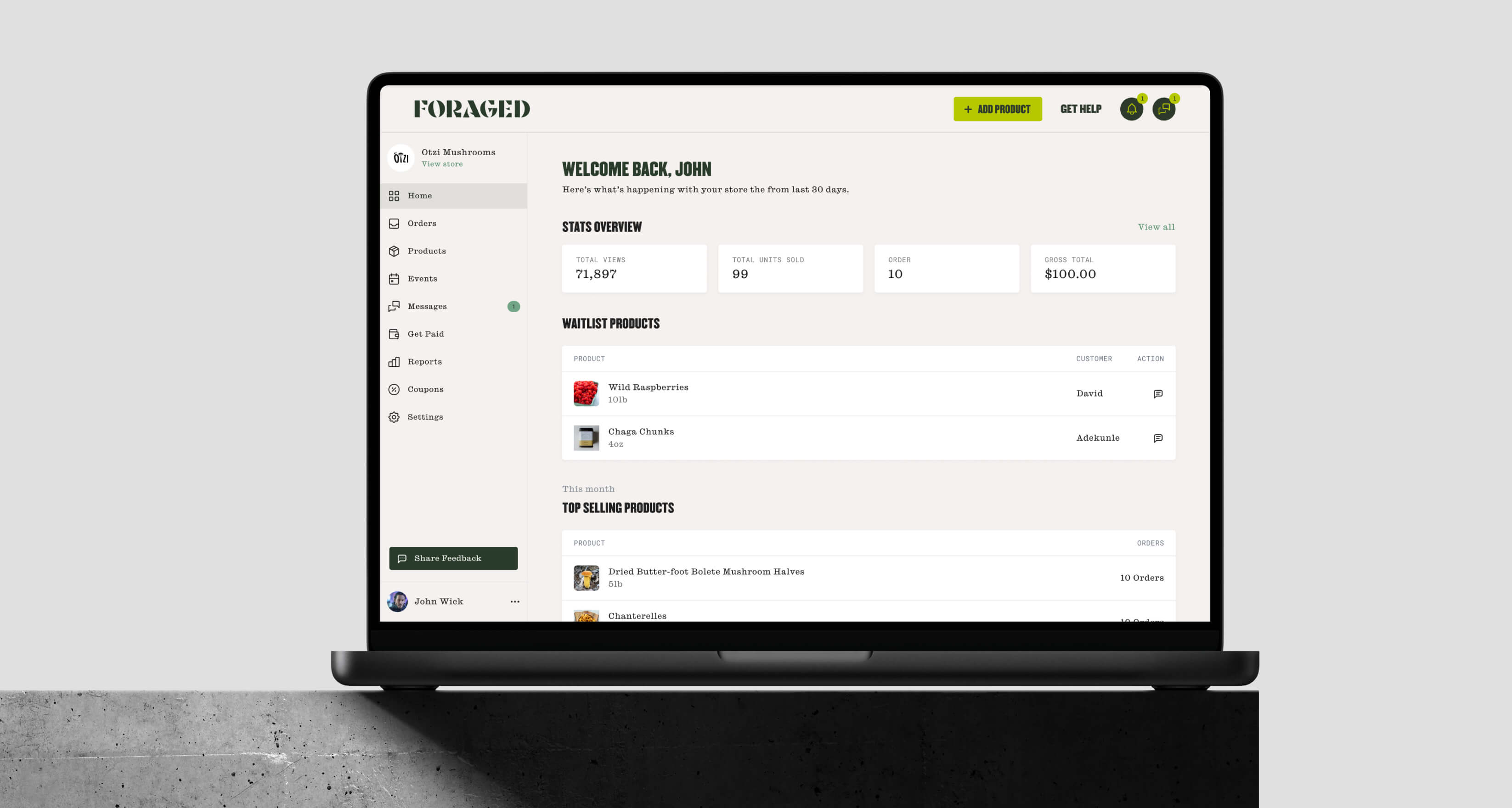
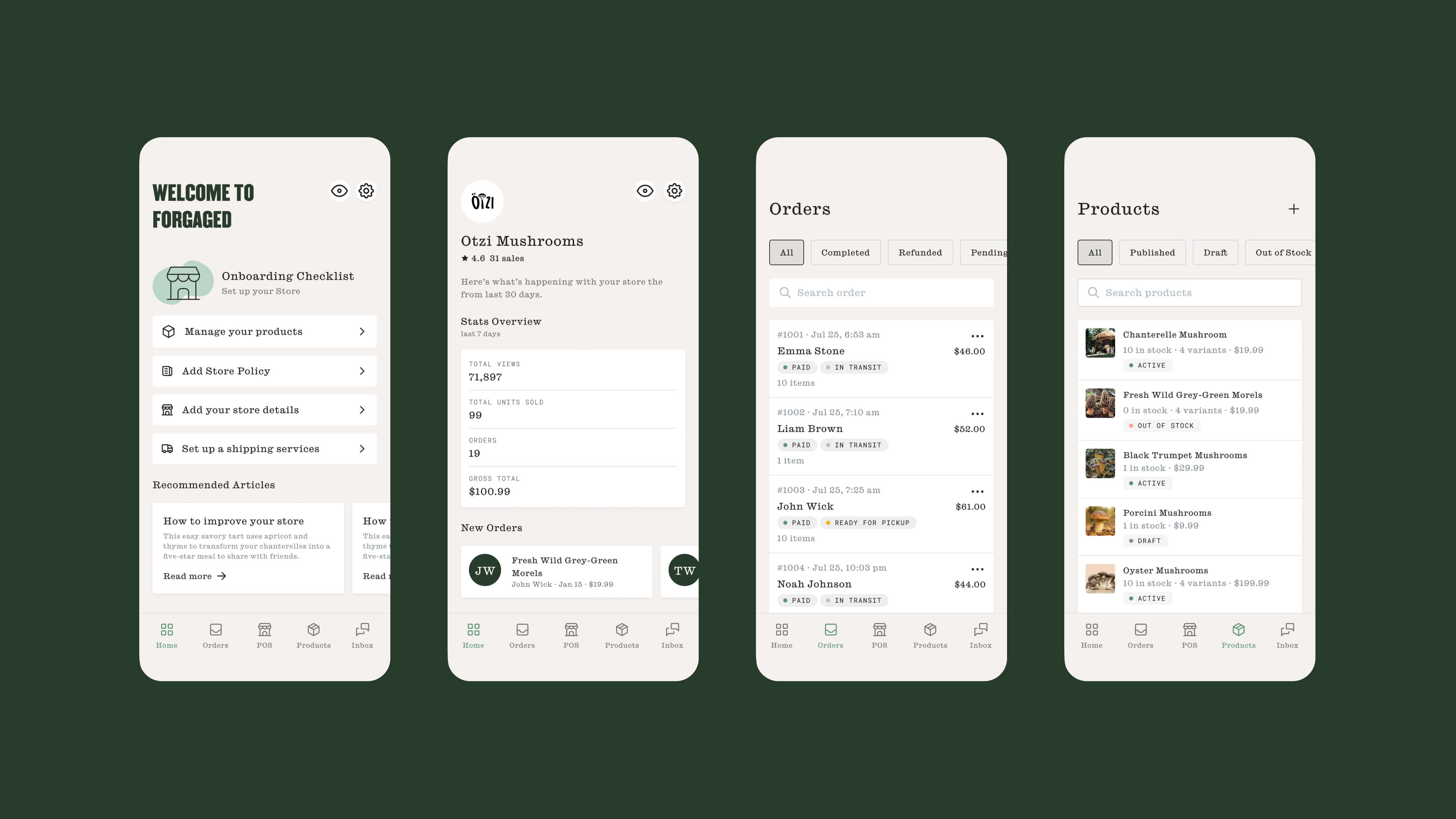
Vendors don't have desk time. Inventory updates and listings happened on phones — between customers, in cars, in kitchens. Any CMS assuming a desktop workflow would fail. → We designed the seller dashboard mobile-first: card-based layouts, large touch targets, minimal text input.
Inventory is seasonal, not SKU-driven. A forager selling wild ramps has a 2–3 week window, not a restockable shelf. Standard "quantity in stock" didn't match their mental model. We designed around availability states (available, limited, sold out, seasonal) with waitlists for out-of-season demand.
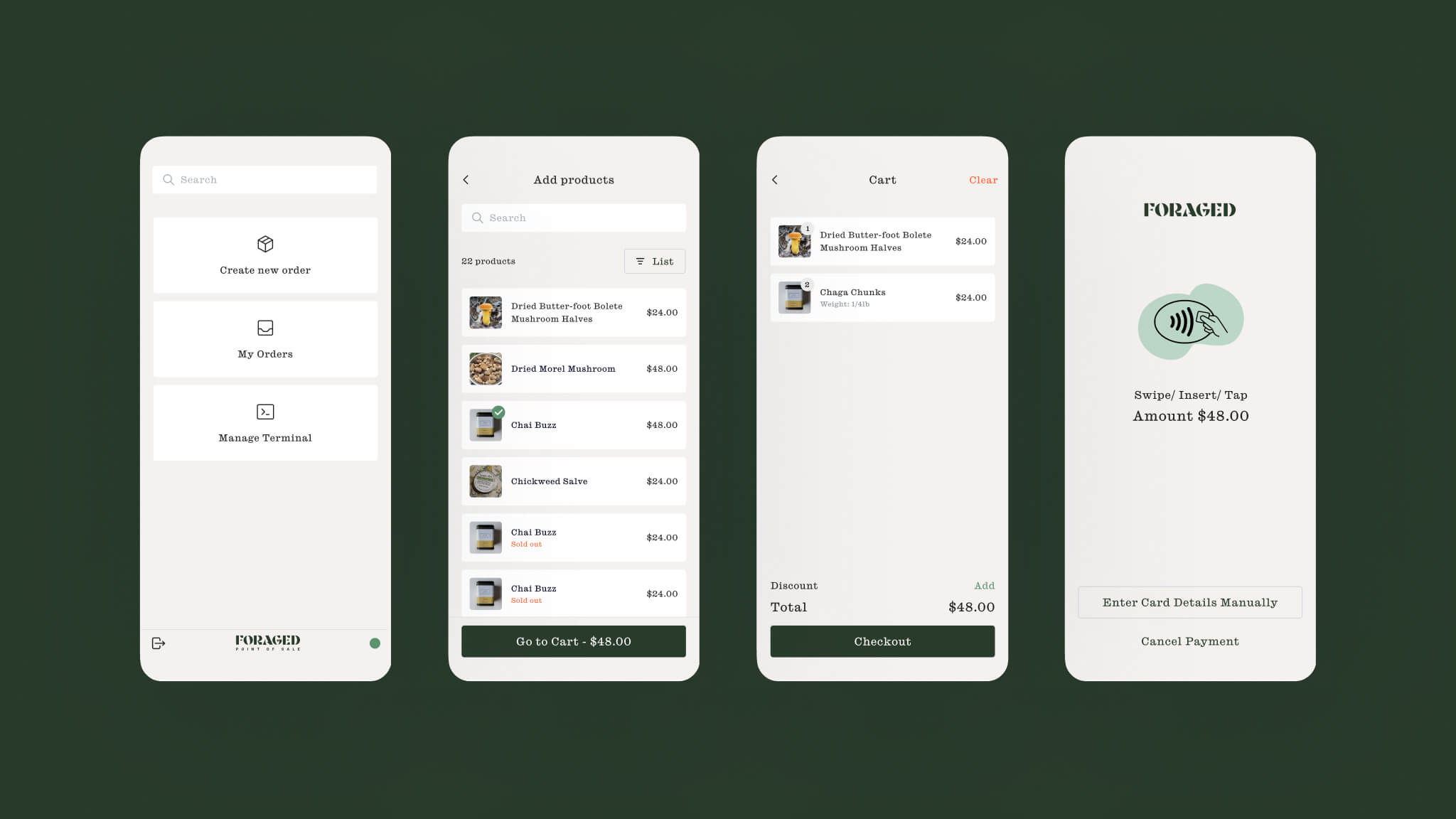
The sale can't interrupt the story. At markets, vendors spend as much time explaining their product's origin as processing payment. Existing POS tools required too many steps and broke the conversation. The mobile POS was designed to complete a transaction without breaking the conversation.
The Challenge
The core problem is running a food business on duct tape. A typical vendor's stack before Foraged:
Selling online: Shopify site at $30–50/month, manually updated, disconnected from in-person sales
Selling at markets: Square or cash, selling the last jar of honey didn't update the website, causing overselling
Orders: Email, Instagram DMs, texts, and phone calls, especially wholesale
Inventory: Spreadsheets or memory, with frequent errors on busy market days
Marketing: Instagram posts and word of mouth. No pre-orders, no waitlists, no CRM
Vendors consolidating from this stack to Foraged reported 96% average savings on software costs. The design challenge was to collapse all of this into one platform that doesn't feel like enterprise software, these users were foragers, not Shopify power users.
Solution
Consumer Marketplace
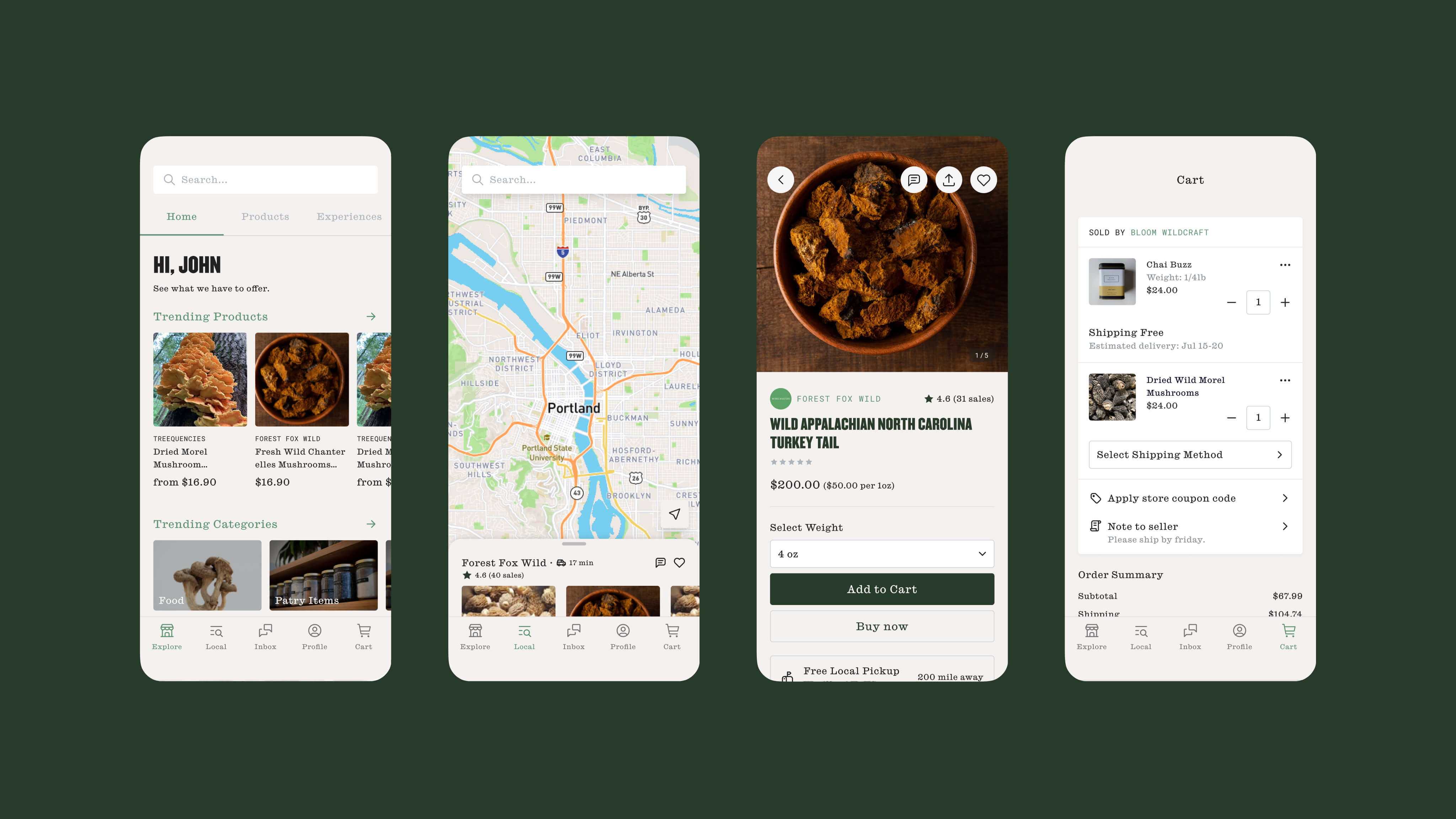
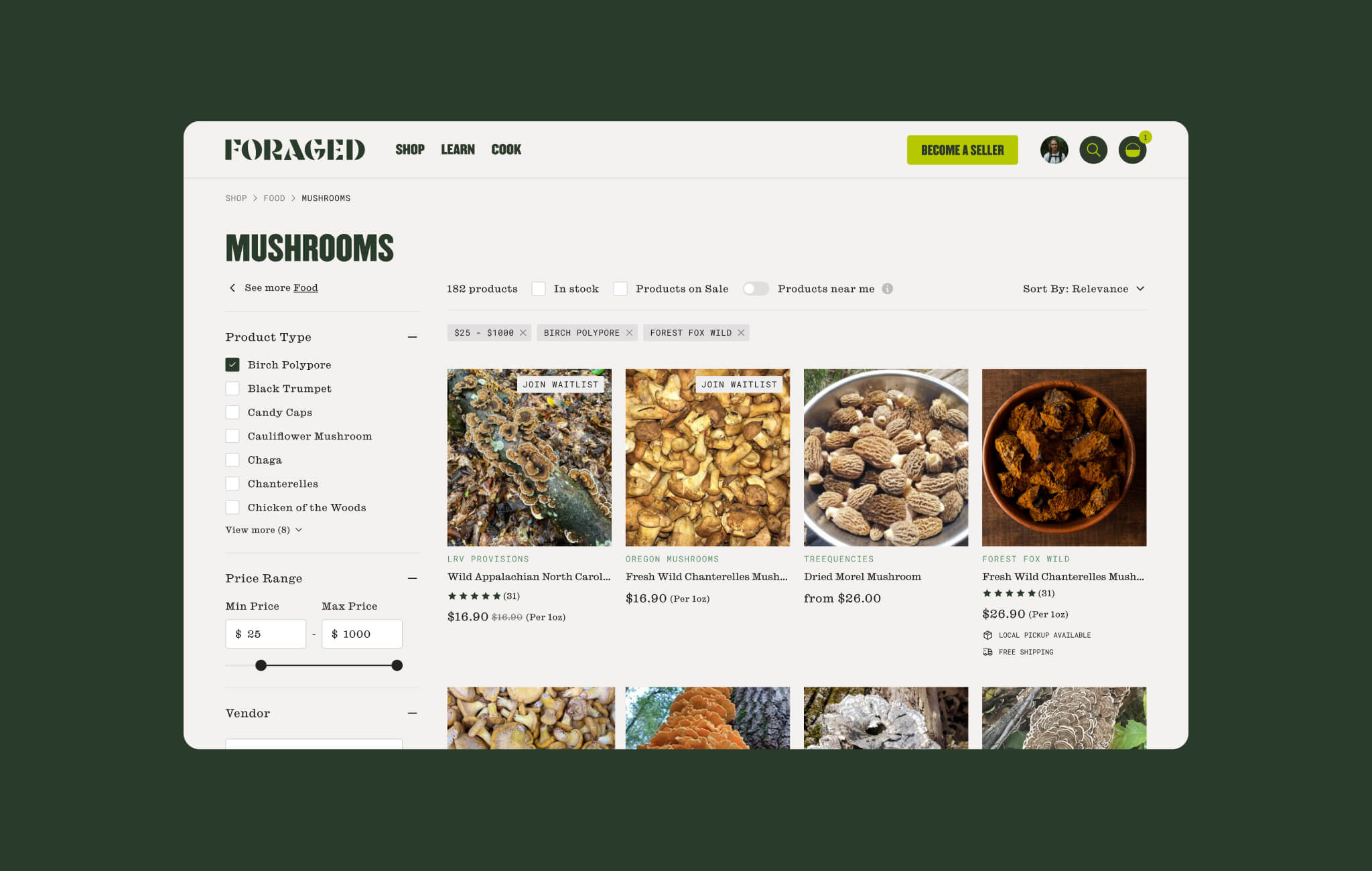
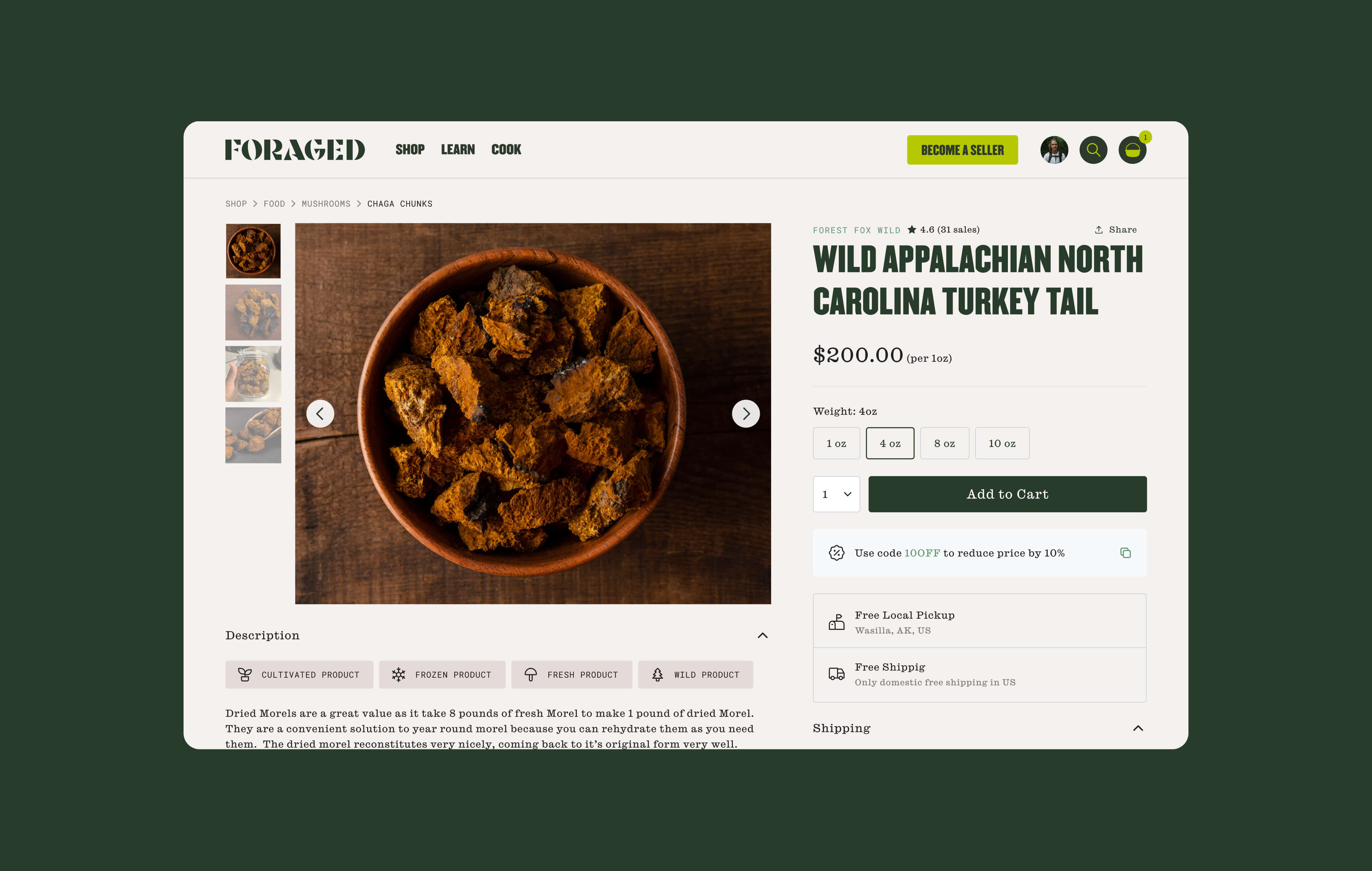
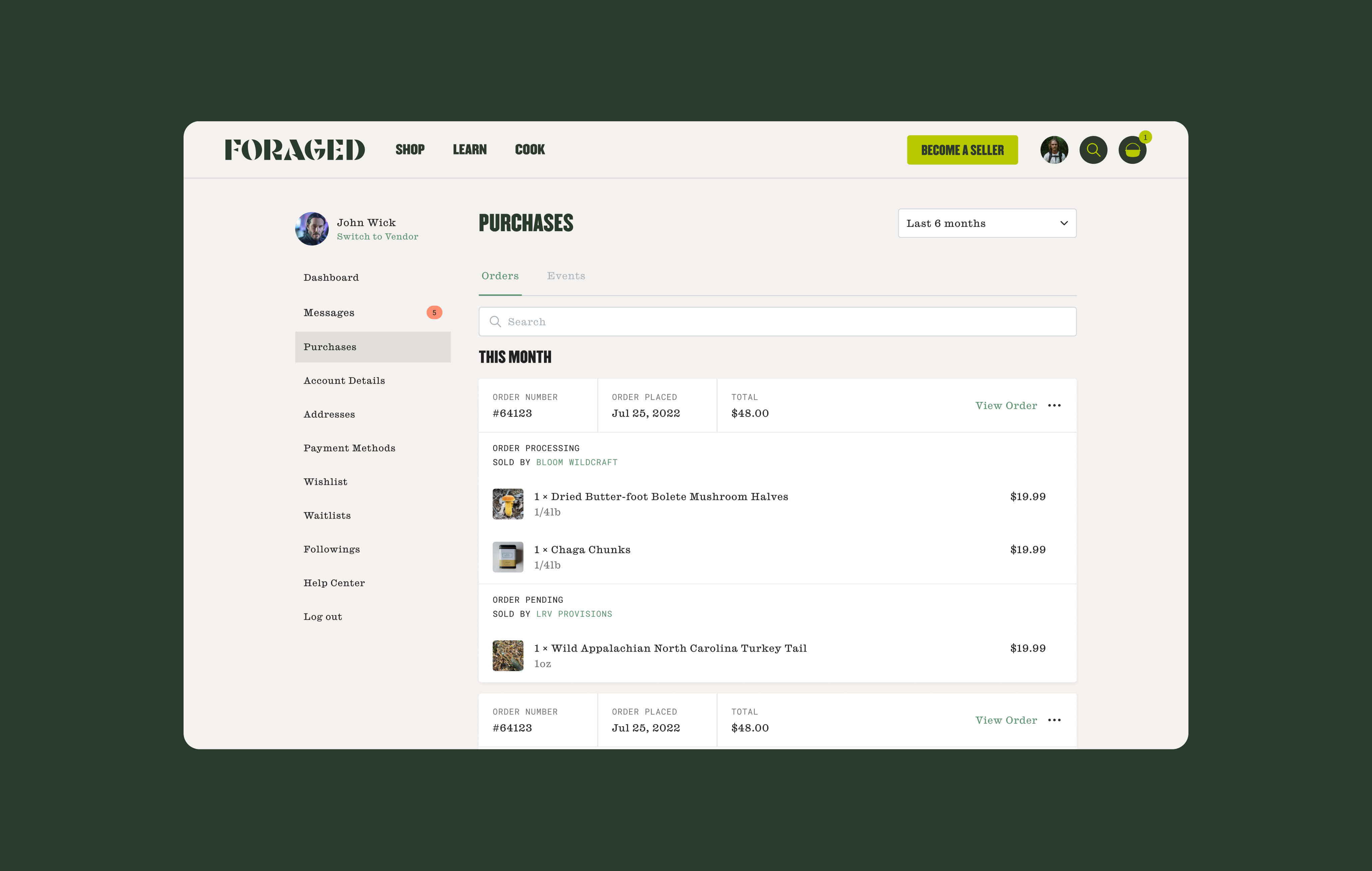
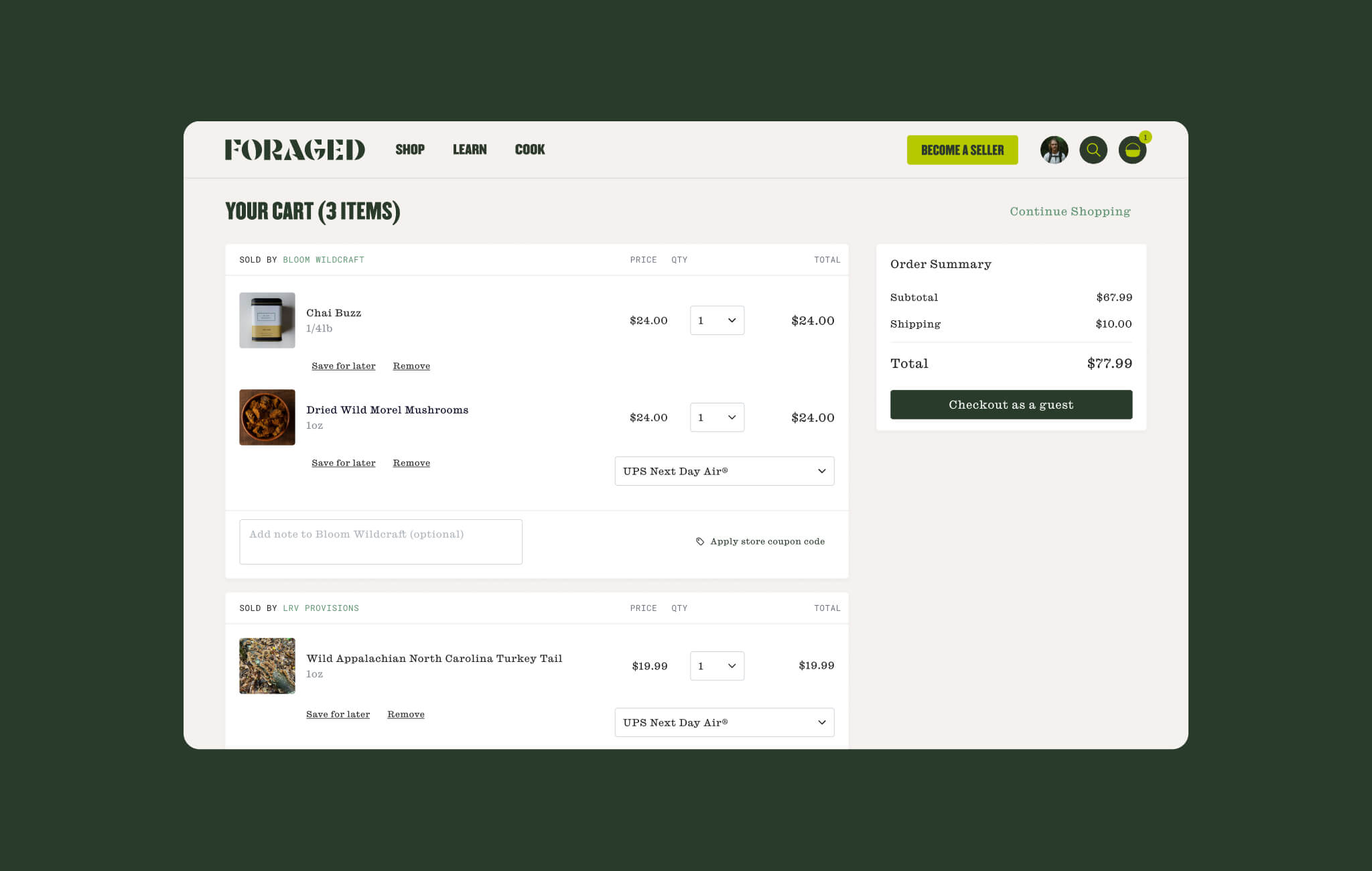
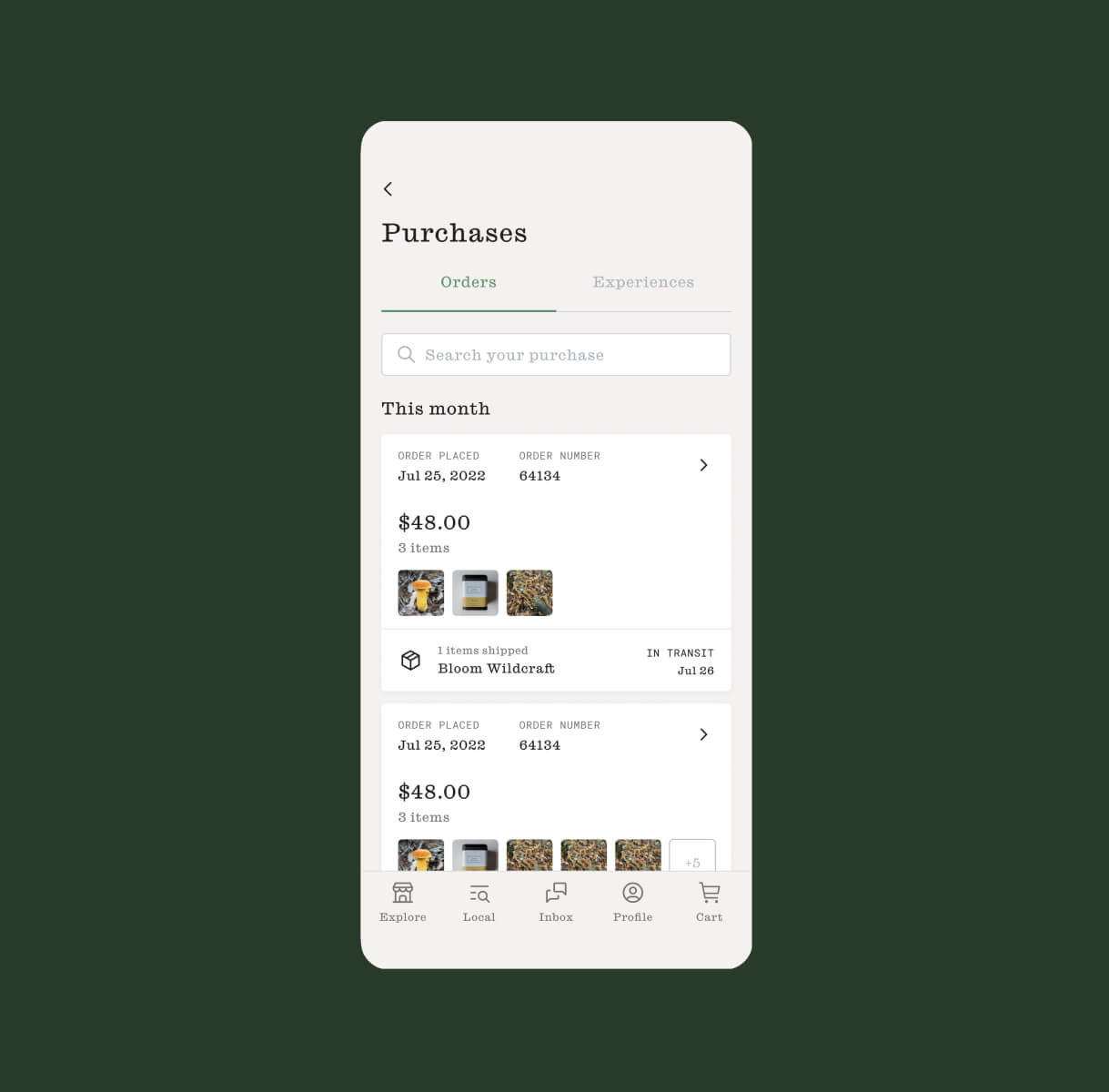
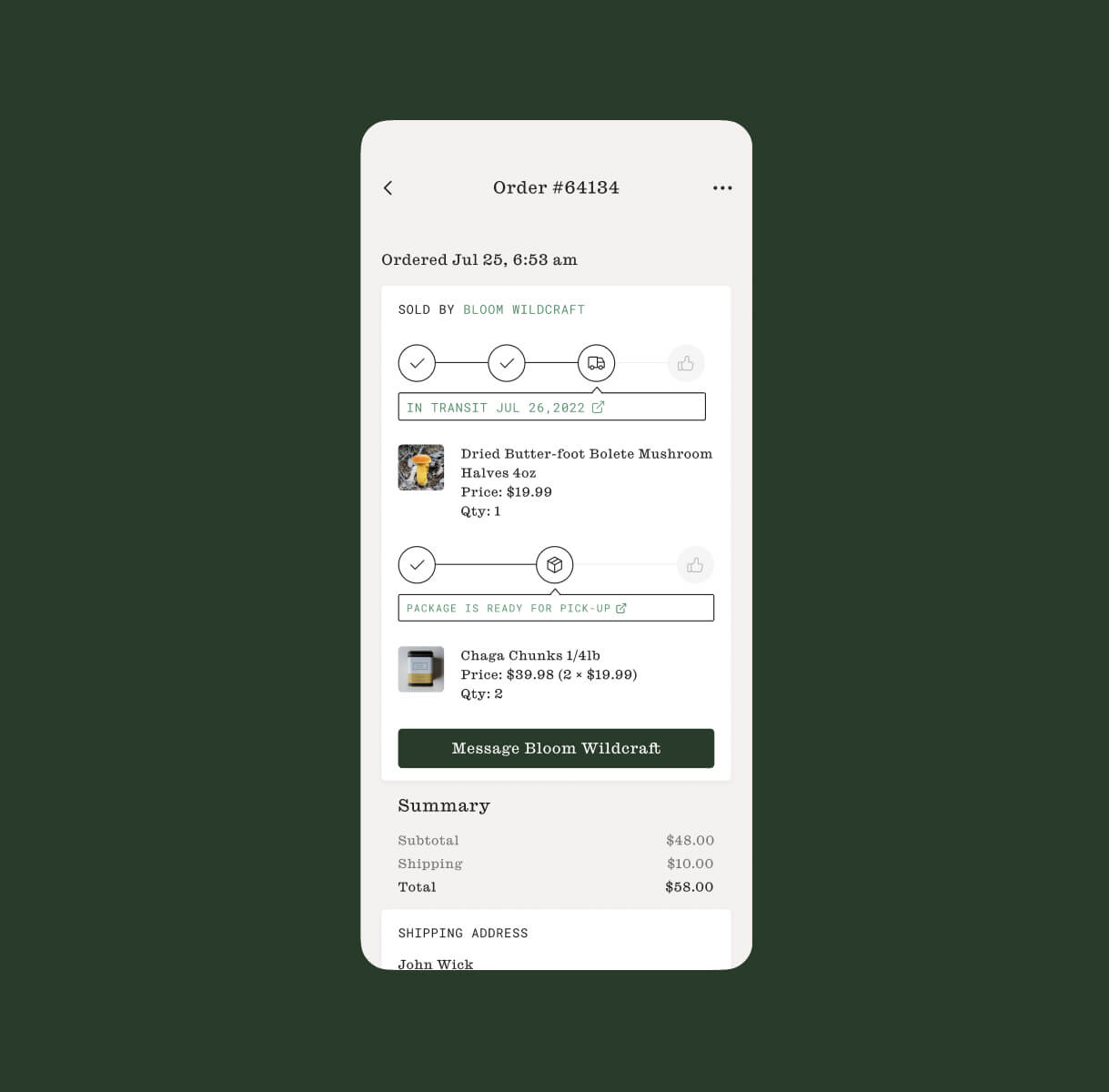
Buying wild food online. The marketplace served food enthusiasts and professional kitchens (Foraged is trusted by world-class restaurants). The core design decision was product page hierarchy. Specialty food buyers choose the producer first, the product second — a customer buying wild ramps cares about who foraged them and where, not just price.
We designed product pages that led with vendor provenance before price and purchase options. Inverting the standard e-commerce template. We also designed for seasonality. Unlike conventional e-commerce, many products exist on a 2–3 week cycle. We introduced availability states and product waitlists, giving buyers a reason to stay connected year-round and giving vendors pre-season demand signals.
Seller CMS
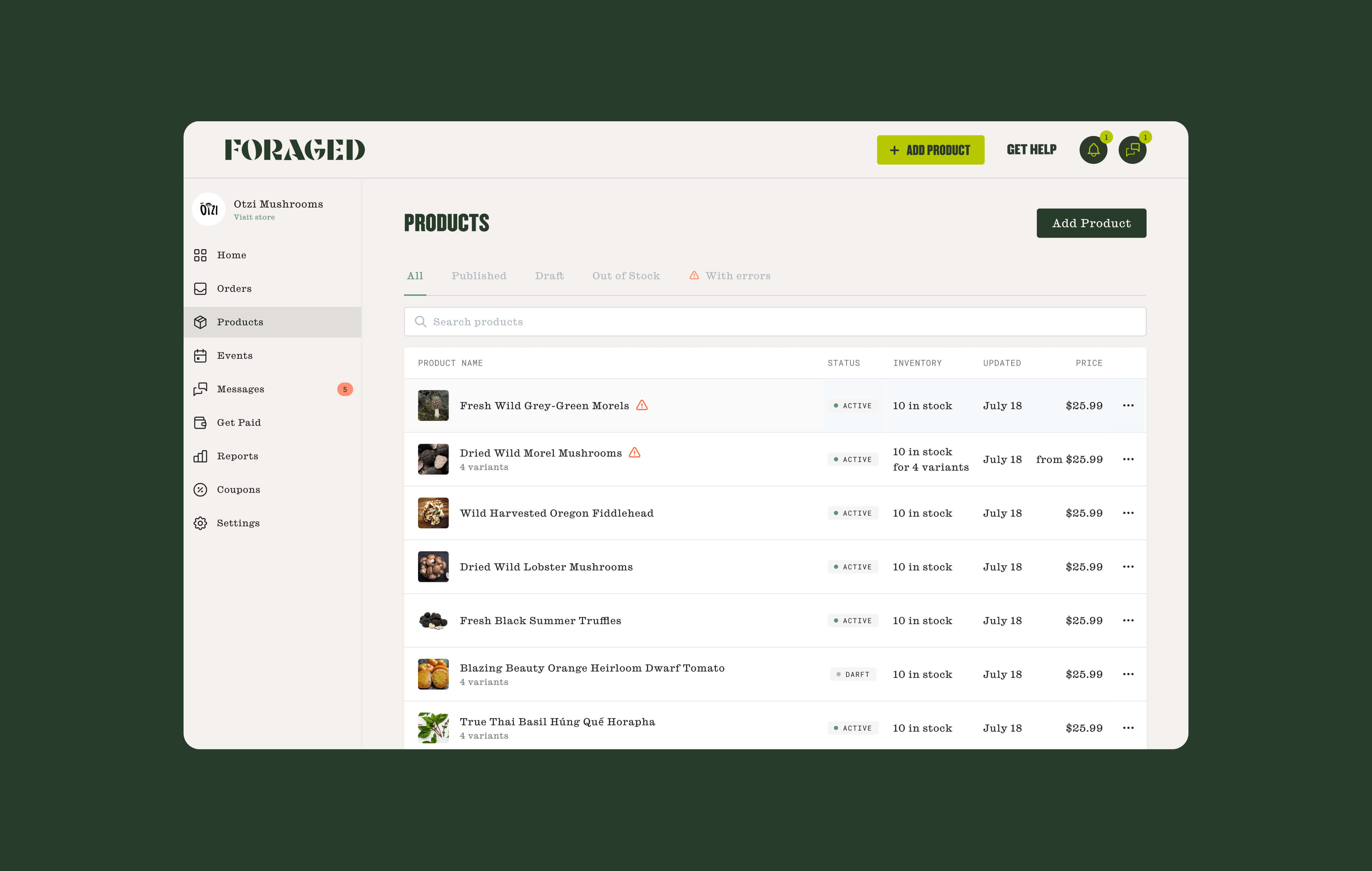
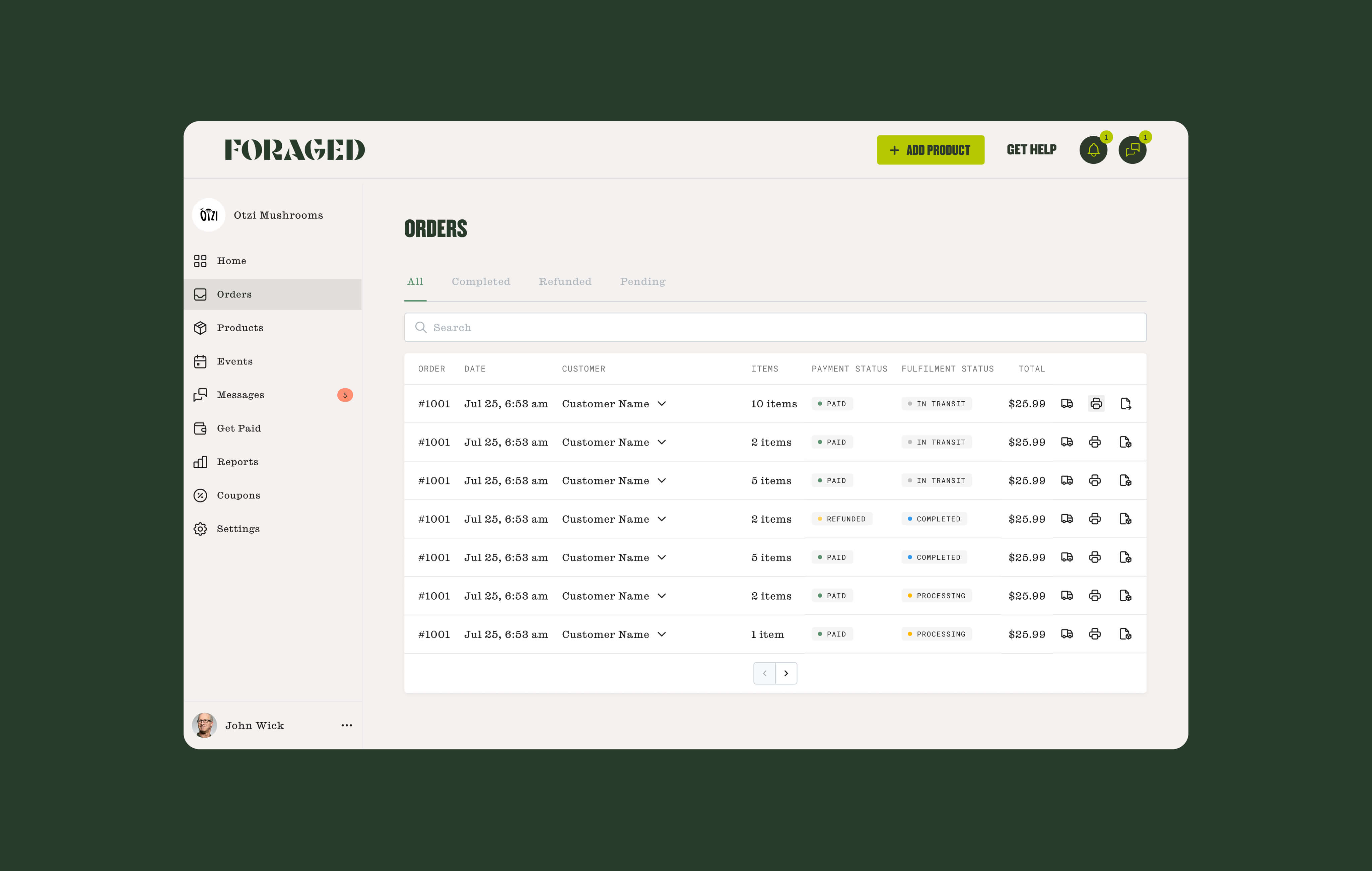
The seller dashboard CMS was the operational backbone — listings, inventory, orders, messaging, and analytics. Our core constraint from research: it had to work primarily on a phone. The dashboard surfaced urgent items first: pending orders, low-inventory alerts, new messages. Product listing was optimized for speed. Photo from camera roll, short description, price, publish.
Inventory sync was the hardest systems challenge. A sale at a farmers' market needed to update the online listing in real time. A wholesale order placed online needed to reduce the vendor's stock before the next market day. We designed inventory as a single source of truth shared across marketplace, CMS, and POS. The CMS also pulled in tools vendors had scattered across separate services: direct messaging (replacing Instagram DMs), pre-orders and local pickup (replacing phone coordination), store followers with notifications, coupons, and built-in email marketing.
Mobile POS
The POS solved a specific problem: accepting payments at markets without disrupting the vendor-customer conversation. Core principle from field research was the transaction should be invisible. Completable via Stripe reader (credit, debit, Apple Pay, Google Pay).
Design decisions
Single-app, not standalone. We integrated POS into the Foraged vendor app rather than building a separate one. Vendors at markets also check inventory, view online orders, and respond to messages, a standalone POS would force constant app-switching. Automatic inventory sync. Every in-person sale updated the marketplace listing instantly.
Impact
The platform launched across three plan tiers (Marketplace, Local, All-Access at $10/month) and grew to 300+ active vendors serving 100K+ monthly visitors. Vendors reported 96% average monthly savings on software costs by consolidating tools. One vendor attributed $250K in additional annual revenue to the switch, closing their previous website entirely.

"I found the POS reader extremely easy to turn on and connect. I was able to fulfill orders under a minute from start to finish."
"Super affordable, way cheaper and way more powerful than a solo site, and way better exposure."
"Having everything — inventory, orders, and my storefront — in one place saved me hours every week. I can't imagine running my booth without it."
"The exposure alone was worth switching. My sales doubled in the first quarter after joining the marketplace."
96%
Average monthly software cost savings.
100K+
Monthly marketplace visitors.
300+
Active vendors on the platform.
$250K
Additional annual revenue, single vendor.