PalmSwap DeFi
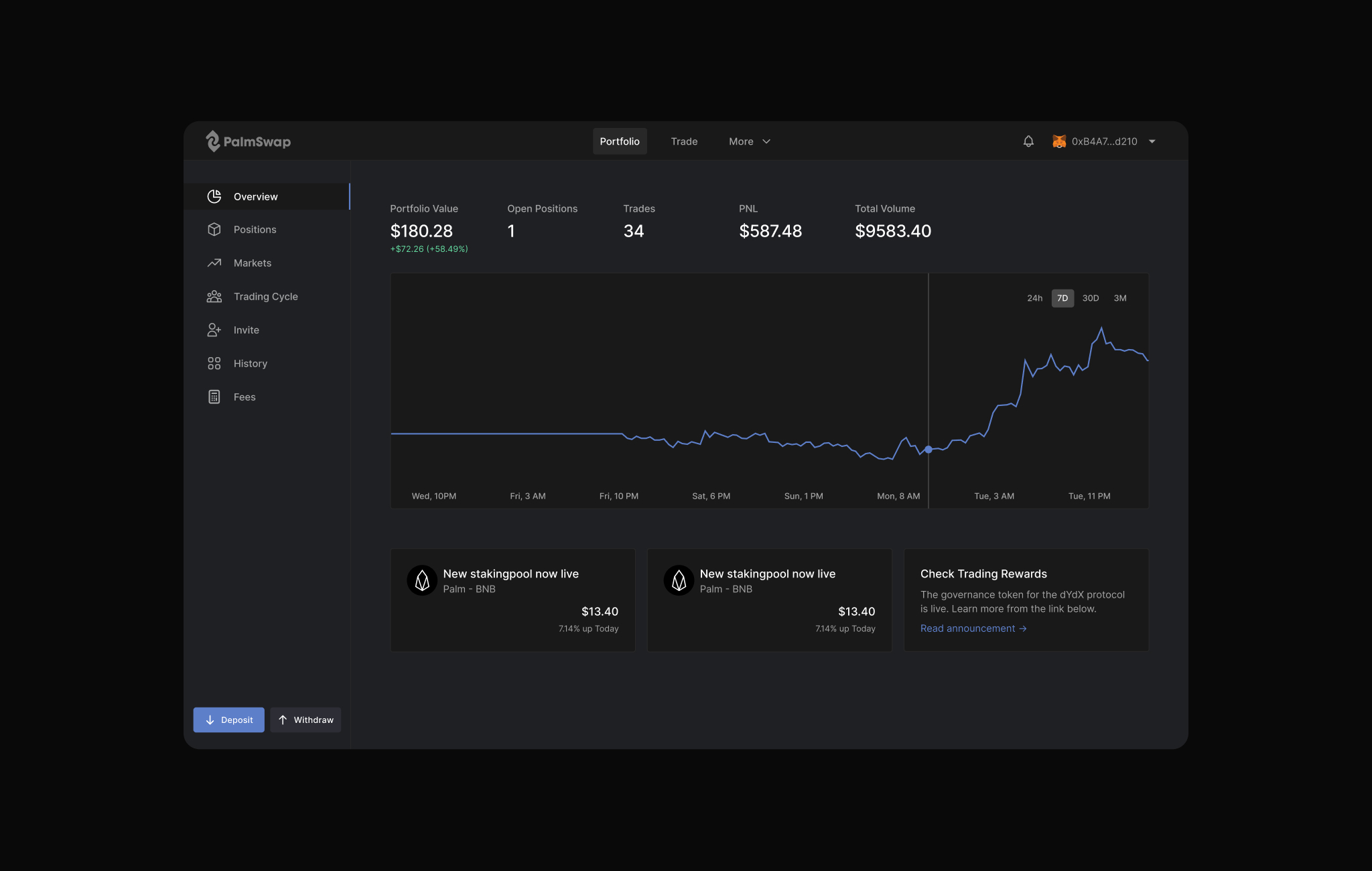
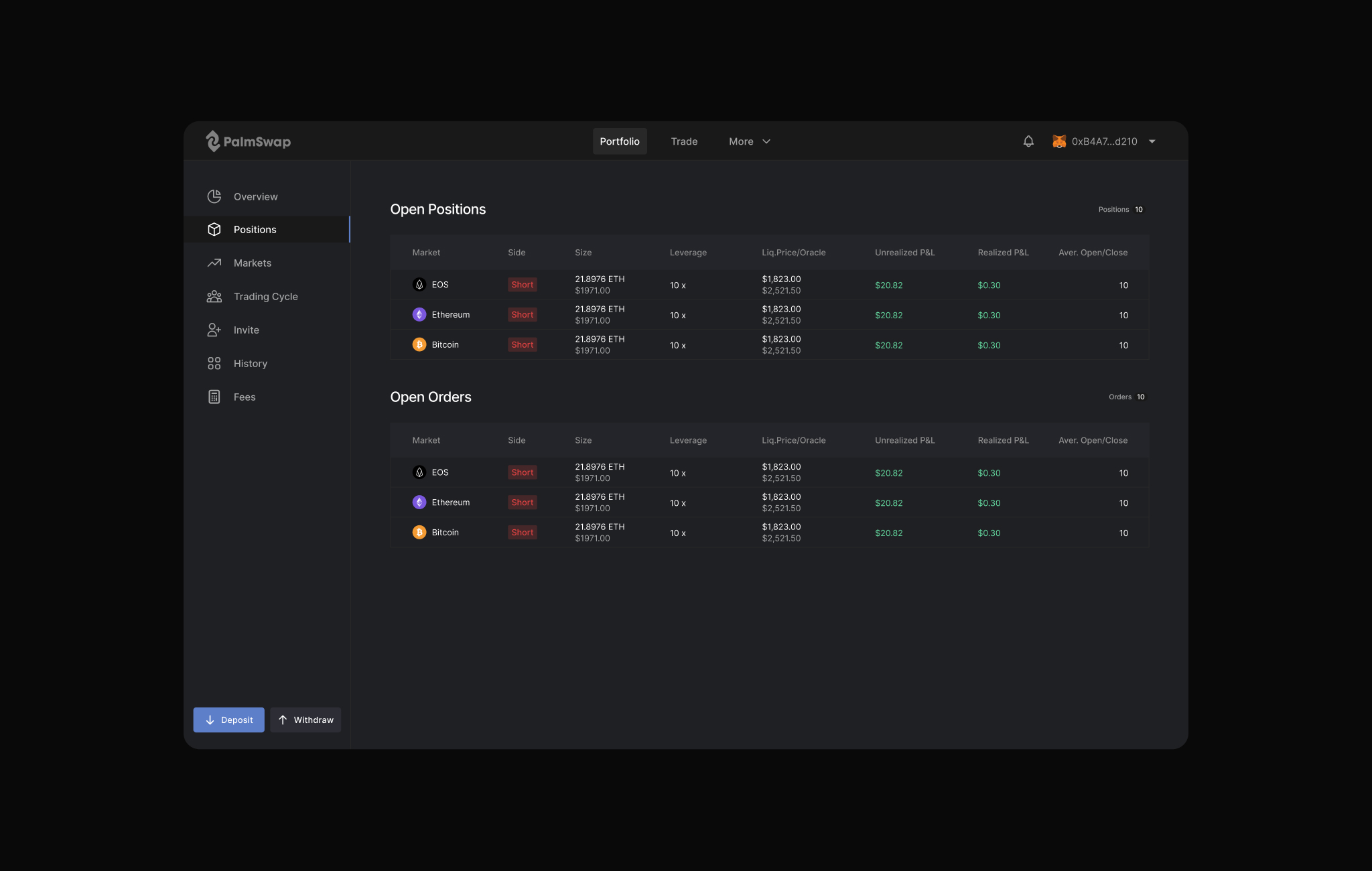
PalmSwap is a decentralized perpetual exchange on BNB Chain where traders open leveraged positions on crypto without depositing into a centralised exchange. The DeFi perpetual market had proven demand — $1.9B in daily volume on Binance — but no strong competitor existed on BNB Chain. Existing DeFi interfaces were notoriously complex and actively drove away the power traders they needed most.
I joined as Product Designer to redesign the trading experience for V1. The core challenge: serve two opposing audiences — power traders migrating from centralized exchanges who expected advanced tooling, and DeFi newcomers who'd never placed a perpetual trade — with a single interface. We solved it through progressive disclosure and a state-aware onboarding flow that kept users on the platform throughout.
The Challenge
Decentralized trading platforms in 2022 failed both audiences — too complex for newcomers, too limited for power users.
Onboarding was a wall. Connecting a wallet, funding it on the right chain, and placing a first trade required knowledge most users didn't have.
The trading dashboard had no hierarchy. Chart, order book, positions, and order entry all competed equally for attention.
Advanced order types were hidden. Palmswap supported limit, stop loss, and take profit, but the UI didn't surface them effectively.
Trust signals were weak. In a non-custodial platform where the interface is the trust layer, the design didn't communicate security clearly enough.
Discovery
Through competitive analysis of dYdX, GMX, Perpetual Protocol, we identified two core users:
Power traders (from Binance, Bybit): expected fast execution, advanced order types, customizable layouts, real-time P&L. They'd tolerate complexity but not missing features.
DeFi newcomers (from PancakeSwap, Uniswap): needed clear explanations of leverage and liquidation, guided wallet connection, and an interface that didn't assume perpetual trading experience.
We solved for both through progressive disclosure: a clean default view newcomers could use immediately, with advanced features accessible but not overwhelming.
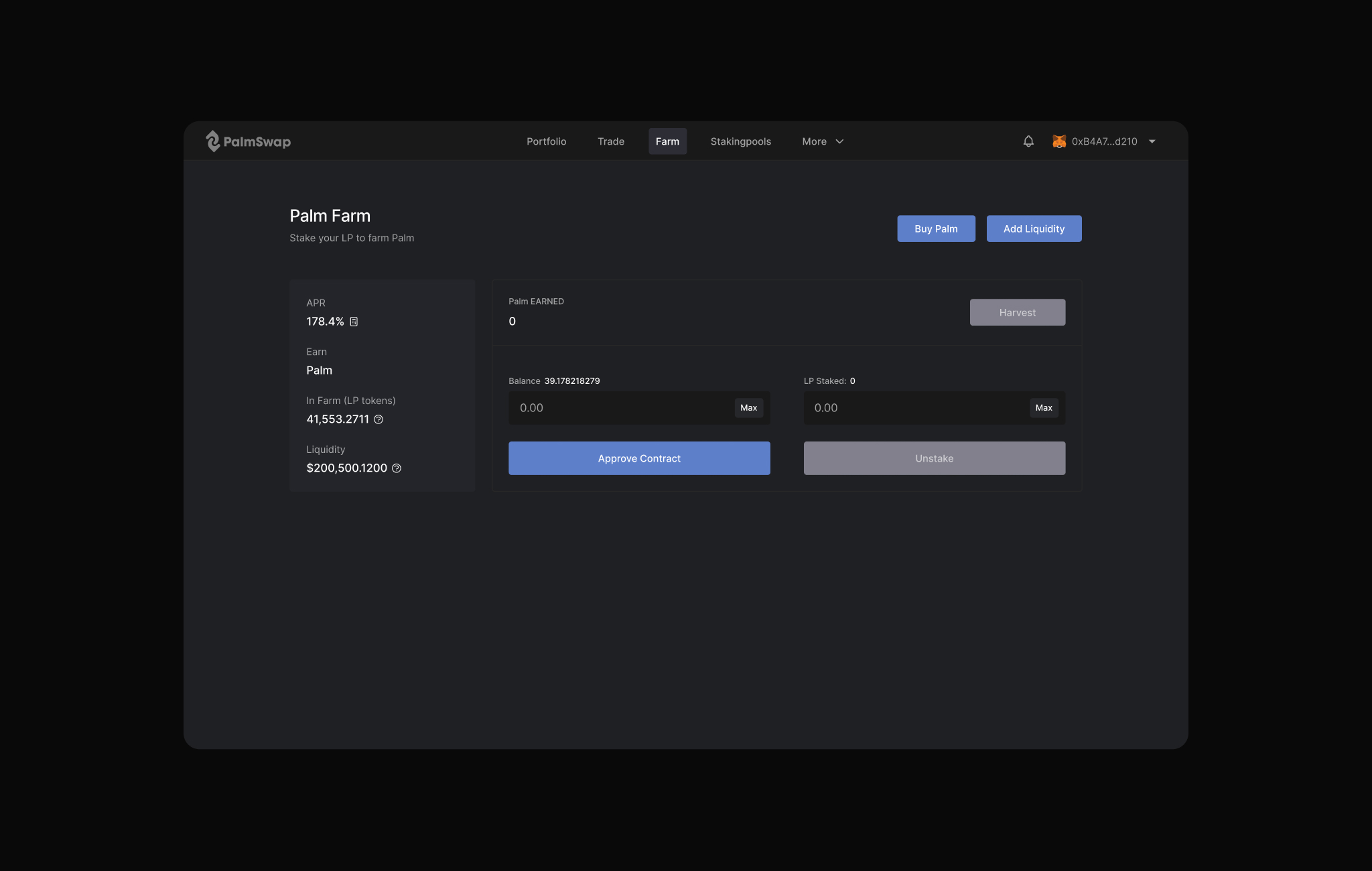
Solution
Trading Dashboard
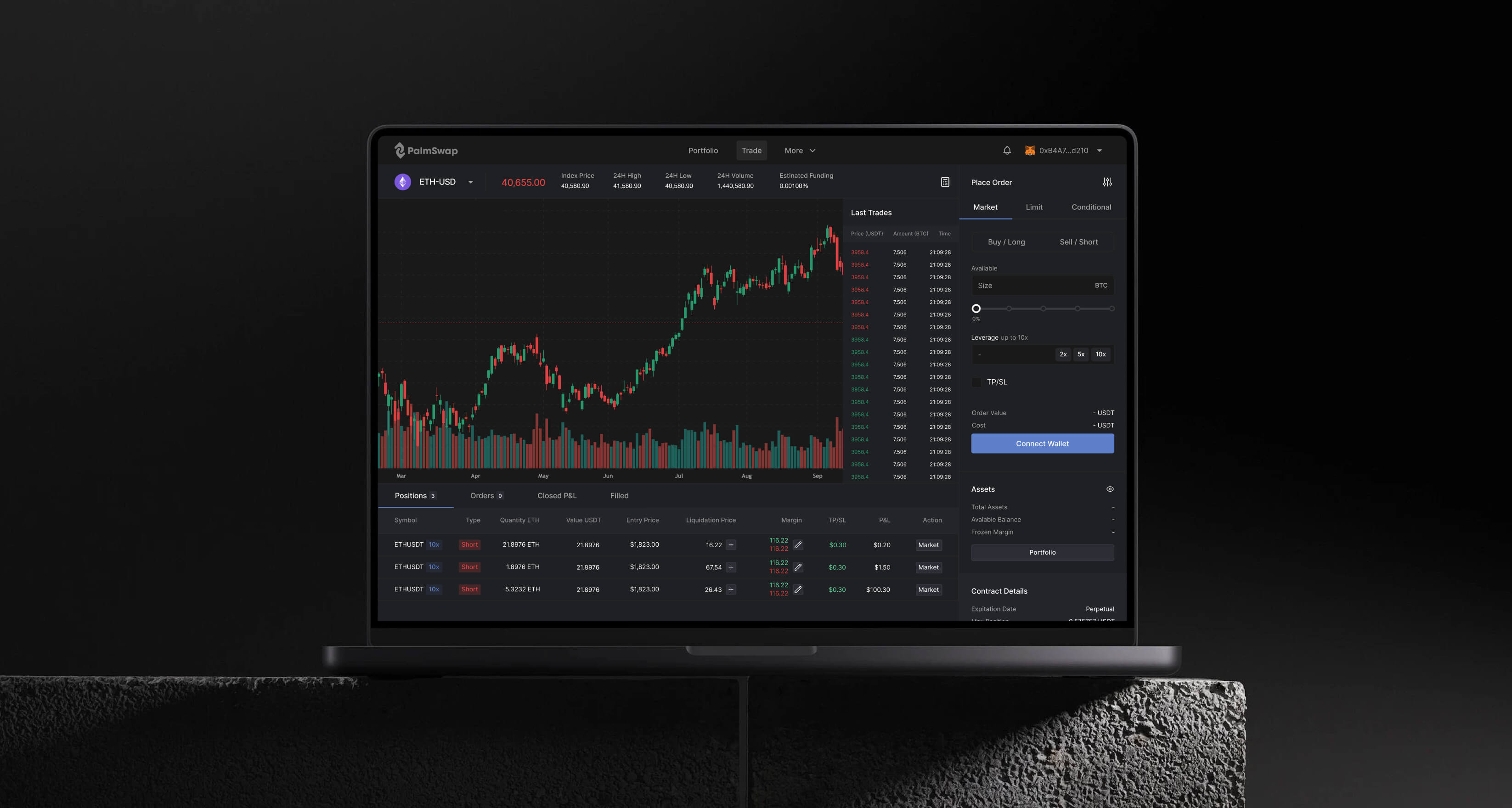
The dashboard is where traders spend 90%+ of their time. The core challenge was information hierarchy — a perpetual trading screen needs chart, order entry, open positions, history, pair selector, and funding rates. Showing everything equally creates noise; hiding too much breaks power-user workflows.
Behavioral pattern. Observing power traders on dYdX and Binance revealed a consistent sequence: chart → decision → order entry → check positions. We designed the layout to match this muscle memory.
Three-zone layout. Chart as dominant anchor (~60% viewport, left/center). Order entry as action zone (right). Positions as compact data table (bottom). Each zone at different density — spacious for chart reading, dense for order controls, compact for monitoring.
Rejected alternative. Modular drag-and-resize layout (TradingView-style).
Onboarding
Wallet to First Trade. Four failure points between landing and first trade. We mapped every user state and designed the flow to detect and resolve each:
- No wallet → what it is + MetaMask link
- Wrong network → one-click BNB Chain switch
- Insufficient balance → exact amount needed + link to buy BNB
- Ready → dashboard with first-trade tooltip
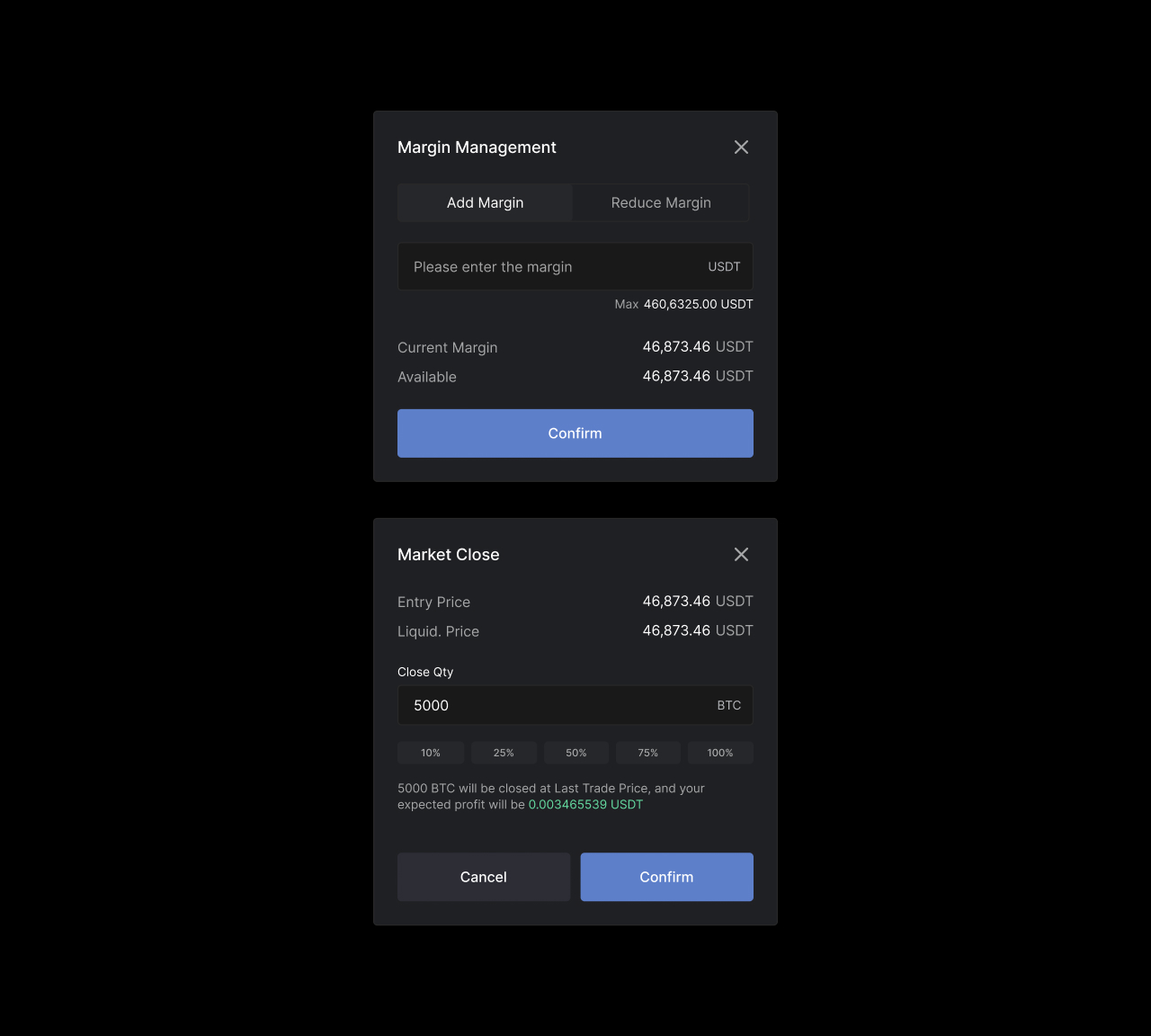
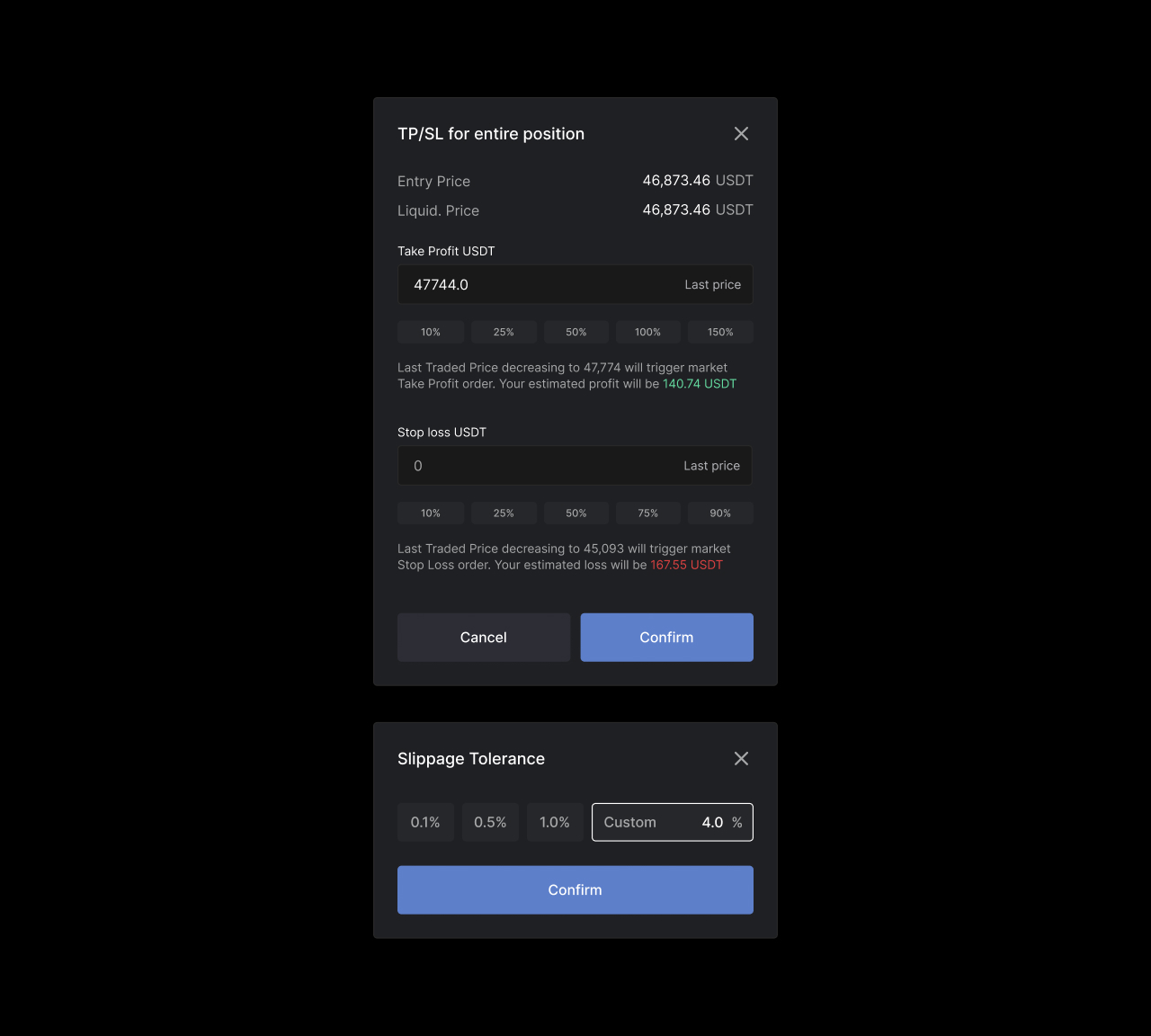
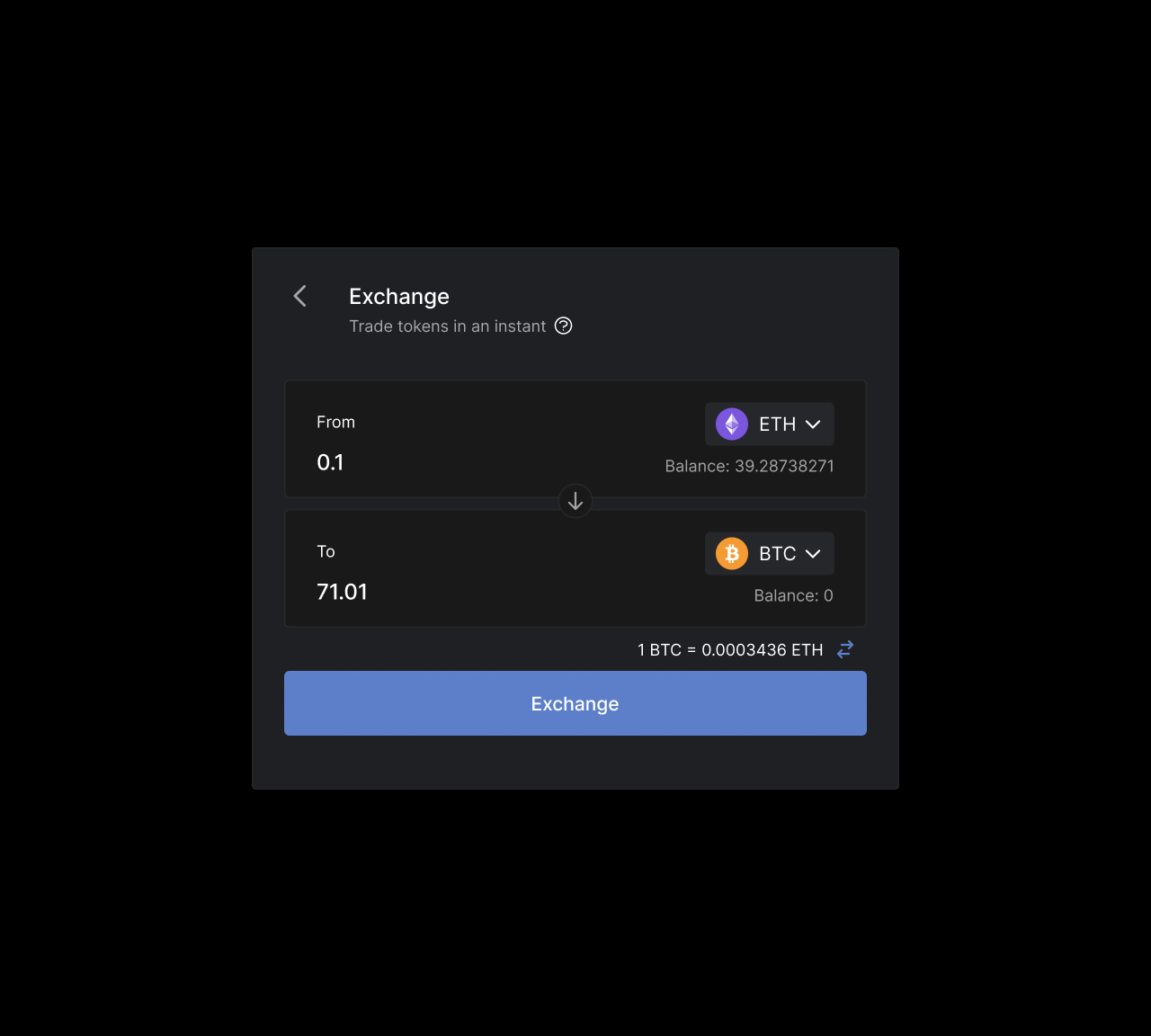
Impact
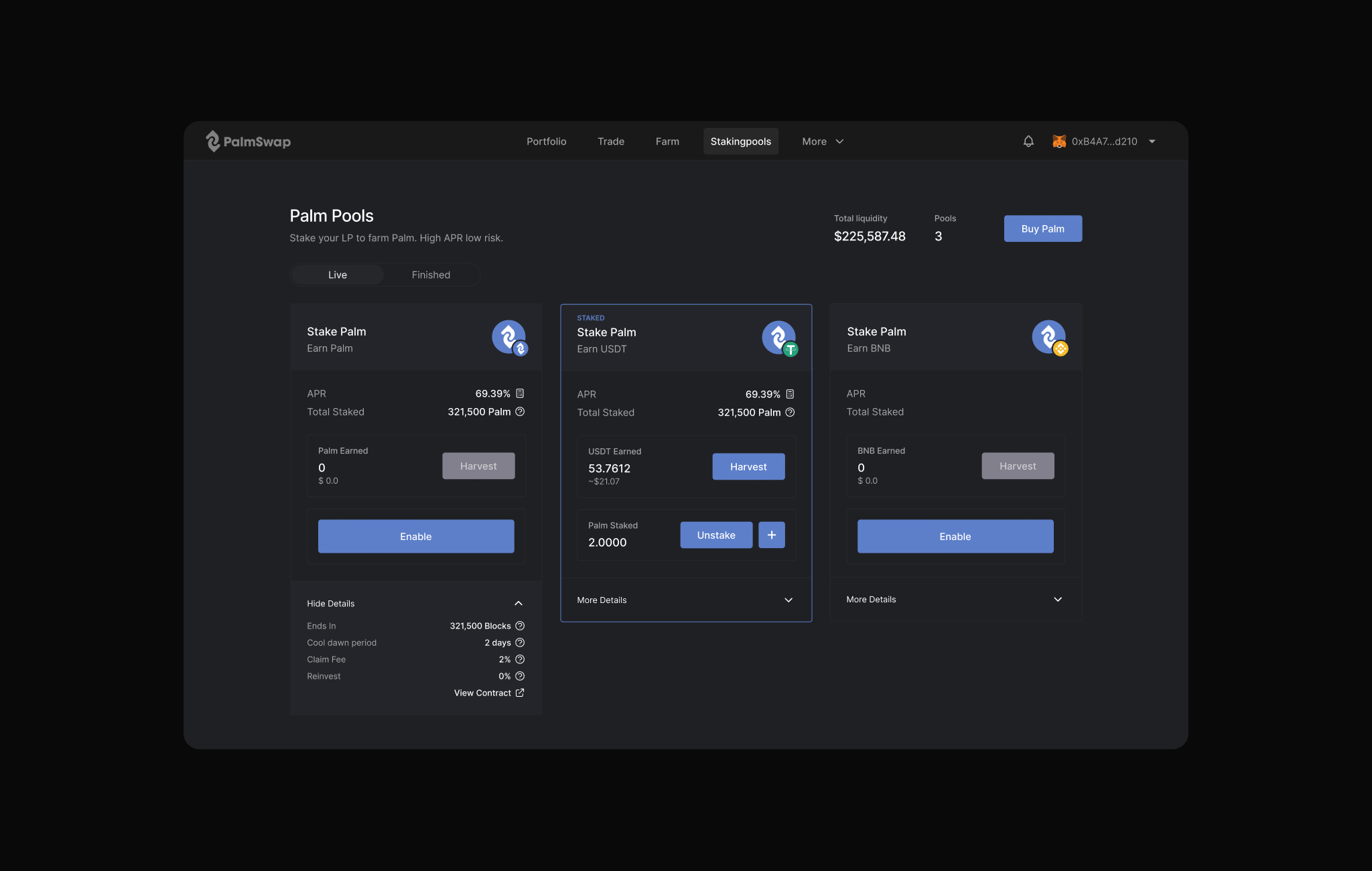
Redesigned trading dashboard, progressive disclosure system, and state-aware onboarding flow. All launched to production in 2022. 350 alpha traders generated $35M in test volume during the launch period.
The biggest takeaway. DeFi design is trust design. There's no logo heritage, no support line, no regulatory stamp. Every pixel has to earn the user's confidence that their funds are safe. This fundamentally changed how I approach interface design for any product handling money or sensitive data.